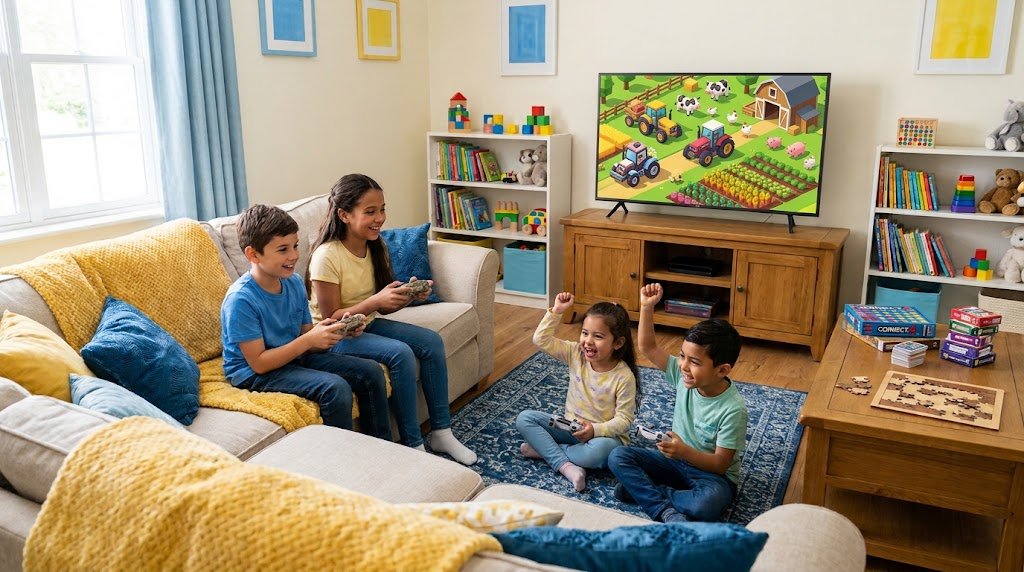
Kids games are an important part of childhood because they bring entertainment, creativity, learning, and social interaction together. Children enjoy playing different types of games, from simple puzzles and outdoor activities to educational apps and exciting video games. These activities can help children explore new ideas, develop useful skills, and enjoy their free time in positive ways.
Today, kids games are available in many different formats. Children can play traditional games at home, enjoy outdoor activities with friends, solve puzzles, or explore age appropriate digital games on computers, tablets, and gaming consoles. Each type of game offers a different experience, making it easier for families to find activities that suit their children’s interests.
Parents and teachers are also becoming more interested in games that combine fun with learning. The right activities can encourage problem solving, creativity, teamwork, and communication. However, choosing suitable games is important because children’s ages, interests, and abilities vary.
In this guide, we will explore different kids games, their benefits, popular examples, and practical tips for finding enjoyable and age appropriate activities.
Table of Contents
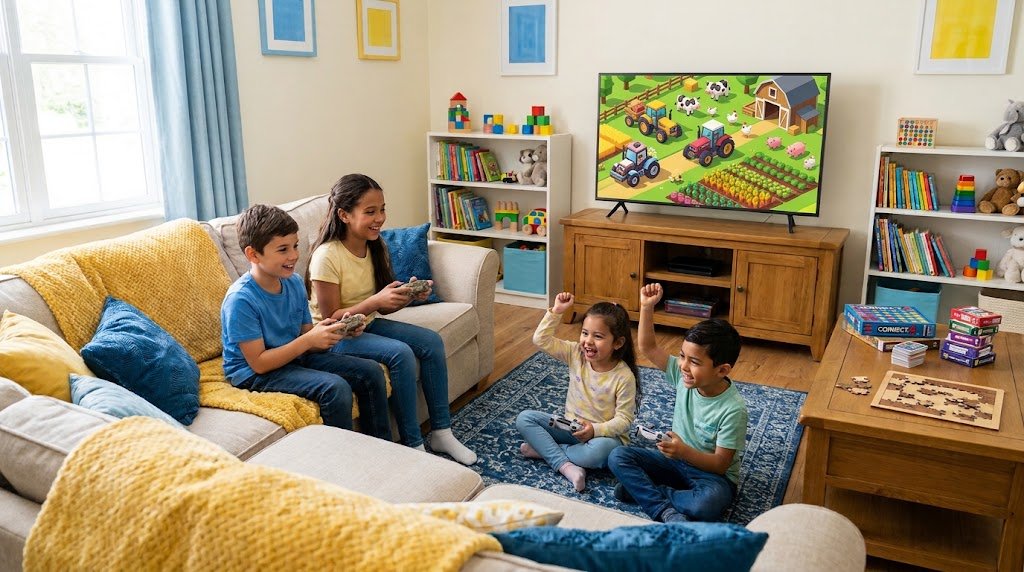
What Are Kids Games?
Kids games are activities designed for children or suitable for their age, interests, and developmental needs. They include physical activities, traditional playground games, board games, puzzles, creative challenges, educational activities, and digital entertainment. Some games focus on learning, while others mainly provide fun, imagination, and social interaction.
The best games for children do not always require expensive equipment or advanced technology. A simple guessing game, a drawing challenge, a ball game, or a matching puzzle can provide an enjoyable experience. Digital games can also be useful when they are appropriate for the child’s age and played with sensible limits.
Kids games can be played individually, with family members, or in groups. Some activities encourage independent thinking, while others teach children how to cooperate, communicate, and follow shared rules. This variety makes games useful for different situations, whether children are relaxing at home, learning in a classroom, or spending time outdoors.
Why Are Kids Games Important for Children?
Play gives children opportunities to explore the world around them. When children build something, solve a puzzle, or participate in a group activity, they practise thinking, decision making, and problem solving. Games can also help them learn patience because many activities require waiting for a turn, following instructions, or trying again after making a mistake.
Social games provide additional opportunities to practise communication and cooperation. Children learn to share materials, listen to others, understand rules, and handle different opinions. These experiences can help them build confidence and develop healthier relationships with friends and family members.
Games can also make learning more enjoyable. For example, a counting game can introduce basic mathematics, while a word puzzle can encourage reading and vocabulary development. When learning activities feel playful rather than stressful, children may be more willing to participate and explore new subjects.
However, every child learns differently, and games are not a replacement for teaching, sleep, exercise, or meaningful family interaction. They work best as one part of a balanced childhood that includes different experiences.
Different Types of Kids Games
Online Kids Games
Online kids games allow children to explore digital activities through websites, apps, and gaming platforms. Common options include simple puzzles, colouring activities, memory challenges, virtual building games, and age appropriate adventure games. These games can be convenient because many are available on devices that families already own.
Some online games encourage logical thinking, pattern recognition, reading, or creativity. For example, a child might solve a puzzle to open a virtual door or arrange objects to complete a challenge. These activities can introduce basic concepts in an interactive way and provide immediate feedback.
Parents should check online games before allowing children to play. Some games contain advertisements, in game purchases, chat features, or links to external websites. Choosing trusted platforms, reviewing privacy settings, and checking age ratings can help families make safer decisions.
Educational Kids Games
Educational kids games are designed to support learning through activities that children find enjoyable. They may focus on mathematics, spelling, reading, science, geography, memory, or problem solving. Instead of simply presenting information, these games encourage children to practise a skill by completing challenges.
For example, a counting game might ask children to group objects by number, while a spelling activity may require them to arrange letters into words. Science games can introduce simple concepts about nature, weather, animals, and the environment. The most effective educational activities match a child’s current ability while offering manageable opportunities to learn something new.
Parents and teachers should look beyond labels such as educational when choosing a game. A useful game should have clear instructions, suitable difficulty, meaningful activities, and an experience that fits the child’s learning needs. It is also helpful to discuss what children learn during play rather than assuming that every game automatically provides educational value.
Indoor Kids Games
Indoor kids games are useful when the weather is poor, outdoor space is limited, or children need an activity at home. Options include puzzles, memory games, building blocks, drawing challenges, treasure hunts, charades, and simple guessing games. Many of these activities require little preparation and can involve the entire family.
Indoor games can encourage creativity and independent thinking. A building challenge, for instance, might invite children to create a bridge using safe household materials. A storytelling game can encourage them to invent characters and describe imaginary places. These activities provide opportunities to practise communication and explore ideas without relying on a screen.
Safety is important when preparing indoor activities. Parents should choose suitable materials, provide enough space, and supervise activities according to the child’s age. Small objects may not be appropriate for very young children, and games involving running or jumping should take place away from furniture and other hazards.
Outdoor Kids Games
Outdoor kids games encourage children to move, explore, and interact with their surroundings. Popular activities include hide and seek, hopscotch, tag, simple ball games, obstacle courses, and nature scavenger hunts. These games can make time outside more enjoyable while giving children opportunities for physical activity.
Outdoor play can support coordination, balance, spatial awareness, and teamwork. Children may also become curious about plants, insects, weather, and the natural environment. A nature based treasure hunt, for example, can encourage them to notice different leaf shapes or identify common colours in the garden.
The activity should match the child’s age, abilities, and surroundings. Adults should consider traffic, weather, water, playground equipment, and other local hazards. Suitable supervision and clear rules can help children enjoy outdoor activities while reducing avoidable risks.
Board Games and Puzzles
Board games and puzzles remain popular because they bring people together around a shared activity. Matching games, picture puzzles, simple strategy games, and age appropriate card games can be enjoyable for children and adults. Families can choose short games for quick entertainment or longer activities for a relaxed game night.
These activities may encourage memory, planning, patience, and logical thinking. Some games ask children to recognise patterns, count spaces, remember information, or make decisions based on changing situations. Playing with others can also help children practise taking turns and accepting that different players may have different results.
The best board game is not necessarily the most complicated one. Instructions should be easy enough for the child to understand, and the game should provide an enjoyable experience without creating unnecessary frustration. Adults can simplify rules when appropriate and gradually introduce more challenging games as children’s abilities develop.
Creative Kids Games
Creative games give children opportunities to imagine, design, build, draw, and tell stories. Examples include drawing challenges, pretend shops, homemade puzzles, role playing everyday situations, and building imaginative worlds with blocks. These activities allow children to express ideas in different ways.
Creativity can also be combined with learning. Children might design a pretend town, create a simple map, invent a story about an animal, or build a structure that solves a basic problem. Such activities encourage experimentation and help children discover that there can be more than one way to approach a challenge.
Creative games do not need to produce perfect results. Their main purpose is to give children room to explore, make decisions, and enjoy the process. Parents can support this by asking open questions, providing safe materials, and allowing children to develop their own ideas instead of controlling every step.
Best Kids Games for Different Age Groups
Games for Toddlers and Preschoolers
Young children often benefit from simple games involving colours, shapes, sounds, movement, and matching. Activities such as stacking blocks, sorting large objects, singing action songs, and matching pictures can introduce basic concepts through play. These games should have simple instructions and allow children to explore at their own pace.
For toddlers and preschoolers, adult participation is often especially valuable. A parent or caregiver can name objects, demonstrate actions, ask simple questions, and respond to the child’s interests. These interactions can support language development and make playtime more engaging.
Safety and age suitability are essential. Toys and game materials should follow age recommendations, and small pieces that present choking risks should be kept away from young children. Screen based activities, if used, should be age appropriate and balanced with active play, conversation, rest, and other daily activities.
Games for School Age Children
School age children can often enjoy games that involve more detailed instructions, simple strategies, reading, counting, and cooperative challenges. Depending on their individual abilities, they may enjoy word games, board games, construction challenges, science activities, and age appropriate digital adventures.
At this stage, children may also become interested in games that allow them to set goals and solve increasingly complex problems. For example, a building game can encourage planning, while a puzzle game may require them to recognise patterns and think through several possible solutions. Group games can provide opportunities to practise teamwork and communication.
Parents can involve children in choosing activities while still checking suitability. Asking what they enjoy about a game can help adults understand their interests and identify useful opportunities for learning. It is also helpful to introduce a variety of activities instead of relying on only one type of entertainment.
Games for Older Children
Older children may prefer more challenging puzzles, strategy games, creative projects, cooperative video games, and activities that allow them to make meaningful decisions. Their interests can vary widely, so it is useful to offer choices rather than assuming that every child enjoys the same games.
Some older children enjoy building virtual worlds, solving complex mysteries, designing levels, or competing in friendly multiplayer games. Others prefer outdoor sports, tabletop games, science challenges, or creative activities. Games can provide opportunities to develop persistence and problem solving skills when the challenge is appropriate.
Digital safety becomes increasingly important as children explore more online platforms. Parents can discuss privacy, respectful communication, age ratings, and the risks of sharing personal information. Open conversations help children understand why boundaries exist and encourage them to ask for help when something online makes them uncomfortable.
Popular Examples of Kids Games
Classic games remain excellent choices for children because they are easy to organise and can often be played with little equipment. Hide and seek encourages movement and observation, while charades invites players to communicate through gestures. Hopscotch and simple ball games provide opportunities for physical activity and coordination.
Board games and puzzles offer a different kind of experience. Picture matching, simple word games, jigsaw puzzles, and age appropriate strategy games can be played alone or with others. Families can choose activities based on how much time they have and whether they want a quiet challenge or a lively group experience.
For digital entertainment, families can explore creative building games, educational puzzle games, child friendly racing games, and age appropriate adventure titles. Well known examples sometimes considered by families include Minecraft, LEGO video games, and selected Nintendo games. However, each title can have different modes, features, and age ratings, so parents should check the specific version before allowing a child to play.
No single game is best for every child. Interests, reading ability, coordination, emotional maturity, and accessibility needs all influence whether a game will be enjoyable. Trying different activities can help families discover suitable options.
How to Choose the Right Kids Games
The first step is to consider the child’s age and abilities. A game with complicated instructions may frustrate a younger child, while an activity that is too simple may not hold an older child’s interest. Age recommendations provide a starting point, but parents should also consider the individual child and how comfortably they can participate.
Next, think about the purpose of the activity. Some families want a fun group activity, while others are looking for ways to practise reading, mathematics, coordination, or creative thinking. Understanding the goal makes it easier to select a suitable game without expecting every activity to provide the same benefits.
It is also important to consider cost, accessibility, and practical requirements. Many enjoyable games use ordinary household materials, while others require a board game, console, computer, or subscription. Families should review any additional costs, advertisements, online interactions, and privacy requirements before choosing digital games.
Finally, observe how the child responds. A good choice should be enjoyable and reasonably challenging without creating constant frustration or pressure. Children should be able to take breaks, ask questions, and move to another activity when their interests change.
Benefits of Educational Kids Games
Educational games can make certain learning activities more interactive. Instead of only reading a lesson or repeating a task, children may solve problems, match objects, answer questions, or complete small challenges. This can give them another way to practise concepts introduced at school or at home.
Different games support different skills. Word games can encourage vocabulary and spelling, number games can provide counting practice, and puzzles can promote pattern recognition and reasoning. Creative building activities may encourage planning and experimentation, while cooperative games can create opportunities to practise listening and working with others.
However, the benefits depend on the design of the activity and how it is used. A game that is confusing, overly difficult, or filled with distracting advertisements may not support learning effectively. Adults can help by selecting suitable games, discussing what children discover, and connecting game activities to real world experiences.
Educational games should complement other learning methods rather than replace them. Reading books, asking questions, exploring nature, talking with adults, and participating in classroom activities remain valuable parts of a child’s development.
Online Gaming Safety for Children
Online kids games can provide entertainment, but not every website or app is suitable for children. Some platforms include advertising, user generated content, chat systems, external links, or in game purchases. Parents should understand these features before allowing children to use a game independently.
Checking age ratings and privacy information is a useful first step. Families should review whether the game collects personal information, allows communication with strangers, or encourages spending money. Where possible, use appropriate parental controls, disable unnecessary chat features, and set purchase restrictions.
Children should also learn basic online safety habits. They should avoid sharing their full name, home address, school details, passwords, or other private information with people online. They should know how to leave an uncomfortable interaction and tell a trusted adult if someone behaves inappropriately.
For younger children, playing in a shared family space can make it easier for adults to provide guidance. Older children can be included in conversations about privacy and responsible gaming so they understand the reasons behind family rules. Safety measures should match the child’s age and the specific game being used.
Tips for Parents and Teachers
Parents and teachers can make kids games more useful by choosing activities that fit the child’s interests and current abilities. Some children enjoy active group games, while others prefer puzzles, drawing, construction, or quiet individual activities. Offering a variety of choices helps children explore different interests.
It can also be helpful to participate in games rather than simply selecting them. Adults can demonstrate rules, encourage children to explain their thinking, and help them work through difficult moments. The goal is not to make every game a lesson, but to create opportunities for enjoyable interaction and discovery.
A balanced routine matters as well. Children need time for sleep, schoolwork, movement, family interaction, and unstructured play. Digital games can fit into this routine, but they should not crowd out other important activities. Suitable limits depend on the child’s age, needs, and family circumstances.
Teachers can also use games to encourage cooperation and participation in the classroom. Matching activities, word challenges, quizzes, and group problem solving tasks can provide alternatives to ordinary worksheets. Activities should remain inclusive so children with different abilities have meaningful ways to participate.
Why Are Kids Games Trending?
Kids games remain popular because families have more choices than ever before. Traditional toys and board games continue to offer simple, shared experiences, while websites, mobile apps, computers, and consoles provide interactive digital entertainment. This range of options makes it possible to find games for different interests and settings.
Another reason for their popularity is the growing interest in learning through play. Parents and teachers often look for activities that can make subjects such as reading, mathematics, science, and language more engaging. Games can provide practice in a format that feels different from a standard lesson, especially when the activity is well designed.
Social experiences also contribute to the appeal. Children often enjoy playing with siblings, classmates, and friends, whether they are completing a puzzle together or taking turns in a digital game. Families may also use game nights as a way to spend time together.
However, popularity does not automatically make a game appropriate. New games should still be checked for age suitability, privacy features, advertising, and in game purchases. The best choice is one that matches the child’s interests and family expectations.
Reviews: How to Evaluate Kids Games
Reviews can help parents understand a game’s strengths and limitations before introducing it to a child. Useful reviews explain the gameplay, age suitability, difficulty, controls, learning features, and any online interactions. They may also mention whether the game contains advertisements or additional purchases.
When reading reviews, consider the source and the date. A review that explains the game clearly is often more helpful than a short rating without context. For digital games, check the current store listing and official information because features, pricing, and online functions can change over time.
It is also useful to distinguish personal opinions from practical details. One reviewer may enjoy a difficult puzzle, while another may prefer a simpler activity. Parents should compare these opinions with the child’s age, interests, and experience rather than relying on a single recommendation.
Whenever possible, preview the game before a child uses it. Testing the instructions, controls, and settings can help adults identify potential problems and decide whether the game is a good fit.
Frequently Asked Questions
What Are the Best Kids Games?
The best kids games are those that suit a child’s age, interests, and abilities. Options include puzzles, drawing challenges, outdoor activities, board games, educational apps, and age appropriate video games.
Families should look for activities that are enjoyable, understandable, and reasonably challenging. It can also help to offer a mixture of active, creative, social, and digital games so children have different ways to play.
Are Online Kids Games Safe?
Some online kids games are suitable for children, but safety depends on the specific website or app. Games may contain advertisements, chat features, external links, or purchases that require adult attention.
Parents should check age ratings, privacy settings, and online features before children begin playing. Teaching children not to share personal information and encouraging them to speak up about uncomfortable interactions are also important steps.
Are Kids Games Good for Learning?
Educational games can support learning by giving children opportunities to practise skills such as counting, reading, memory, and problem solving. They can make certain activities more interactive and encourage children to keep exploring a topic.
The results depend on the quality of the game and how it fits into the child’s learning routine. Games work best alongside reading, conversation, classroom instruction, and hands on experiences.
What Kids Games Can Children Play Without a Computer?
Children can enjoy many games without a computer, including hide and seek, hopscotch, charades, puzzles, drawing challenges, building activities, and board games. These options can be organised at home, in a classroom, or in a suitable outdoor space.
The right choice depends on the child’s age, available space, and number of players. Adults should choose safe materials and provide appropriate supervision when needed.
How Can Parents Choose Age Appropriate Games?
Parents can begin by checking the game’s age recommendation, instructions, content, and difficulty. They should also consider whether the game includes online communication, advertisements, or spending features.
Observing the child during play can help parents decide whether the activity is suitable. If the game consistently causes frustration or includes features that do not meet family expectations, another option may be better.
Can Kids Games Help Develop Creativity?
Yes, many games encourage creativity by allowing children to draw, build, invent stories, design objects, or explore imaginary environments. These activities give children opportunities to experiment with ideas and make their own decisions.
Creative play does not need to follow a single correct method. Giving children room to try different approaches can make the experience more enjoyable and help them develop confidence in expressing their ideas.
How Much Time Should Children Spend Playing Video Games?
There is no single time limit that works for every child and every situation. Families should consider age, individual needs, the type of game, and whether gaming affects sleep, physical activity, schoolwork, or social interaction.
Parents can create a balanced routine with regular breaks and time for other activities. Following relevant age based health guidance and maintaining open communication can help families decide what works best.
Are Free Kids Games Always Completely Free?
Not necessarily. Some games are free to start but include advertisements, optional purchases, subscriptions, or features that require payment. Others may offer limited content without charge and ask users to pay for additional activities.
Before choosing a free game, check its pricing details, privacy information, and purchase settings. Parents can disable or restrict purchases where possible and help children understand that free access does not always mean every feature is free.
Conclusion
Kids games offer many ways for children to enjoy their free time, explore new ideas, and interact with others. From outdoor activities and board games to creative challenges and educational apps, there are options for different ages, abilities, and interests.
You May also find this blog on below website :
Try Our Free tools :

Muhammad khubaib
Gaming editor and browser game strategist at PlayStrom.
📖 Related Blog Articles
GTRACING Gaming Chair: Features, Comfort, Models, Pros, Cons, and Buying Guide
A gaming chair should support your posture, fit your desk, and remain comfortable during long gaming sessions. The GTRACING gaming chair offers…
Best PS5 Games: Top Games Worth Playing in 2026
Finding the best PS5 games is easier when you know what kind of experience you actually want. From creative adventures and competitive…

Will GTA 6 Be on PC? Release Date, Rumours and Latest News
Many gamers are asking: will GTA 6 be on PC? While a PC version is reportedly planned, Rockstar Games has not officially…
Related & Recommended Games

2048 Neon Edition
2048 Neon Edition is a custom-coded sliding tile puzzle game built from scratch using HTML5 and Vanilla JS.

Neon Snake Arcade
Neon Snake Arcade is a custom free web browser snake game built natively with HTML5 canvas and responsive touch controls.

2048 Puzzle Web
2048 is a free daily sliding block puzzle browser game where players slide numbered tiles to merge them into 2048.