Soccer is one of the most popular sports in the world, attracting millions of fans who enjoy watching exciting matches, supporting their favorite teams, and following international competitions. Whether you are watching soccer for the first time or regularly following professional tournaments, understanding how long a soccer game lasts can help you enjoy the experience.
A standard professional soccer game lasts 90 minutes of regulation playing time. The match is divided into two equal halves of 45 minutes, with a halftime break between them. However, the actual time required to complete a game is usually longer because referees allow additional time for injuries, substitutions, goal celebrations, and other interruptions.
Some matches can take even longer when extra time and penalty shootouts are required. Youth competitions, school matches, and friendly games may also have different playing durations depending on their rules.
In this complete guide, you will learn how long a soccer game is, how halftime works, why referees add stoppage time, and how different soccer competitions manage match duration. You will also find a comparison table that makes it easier to understand the playing time for different formats.
Table of Contents
What Is the Standard Length of a Soccer Game?
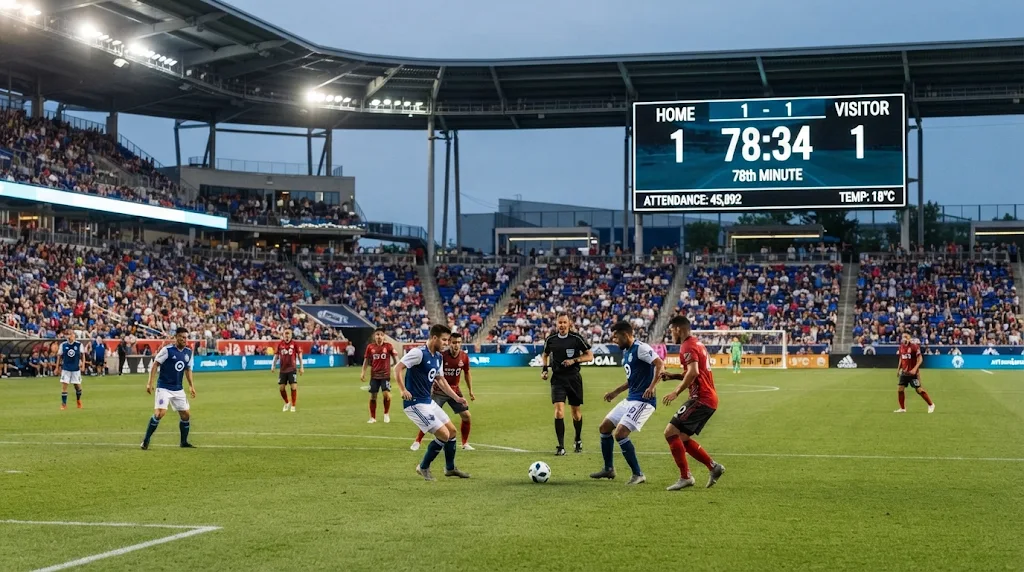
A standard soccer game lasts 90 minutes of regulation playing time. According to the official Laws of the Game, a normal match consists of two equal halves, each lasting 45 minutes. This format is used in most professional men’s and women’s soccer competitions around the world.
The 90 minute structure provides enough time for both teams to compete, create scoring opportunities, defend their goals, and demonstrate their skills. Although the official playing time is fixed, the final duration can change because of stoppages and additional time.
Two 45 Minute Halves
A regular soccer match begins with the first half, which lasts 45 minutes. During this period, both teams attempt to score goals while defending against their opponents. Players use passing, dribbling, tackling, teamwork, and different tactical strategies to control the game.
After the first 45 minutes, the referee signals the end of the first half. Players leave the field or move toward their team areas for the halftime interval. Once the break finishes, both teams return to the field for the second half.
The second half also lasts 45 minutes. Teams continue competing until regulation time and any additional time have been completed. The referee then blows the final whistle to officially end the match.
Total Regulation Playing Time
When people ask how long is a soccer game, the simplest answer is 90 minutes. This number represents the combined duration of both halves and does not include halftime or any additional time.
For example, if a match begins at 7:00 PM, the first half is scheduled to finish after 45 minutes of playing time. Following the halftime interval, the second half begins and another 45 minutes of regulation play takes place.
However, a match will not necessarily finish exactly 90 minutes after kickoff. Stoppages, injuries, substitutions, and other interruptions can extend the playing time.
How the Match Clock Works
Unlike some other sports, soccer generally uses a running clock. The clock continues moving when the ball goes outside the field, when a player receives attention for an injury, or when a team makes a substitution.
The referee keeps track of lost playing time and adds an appropriate amount at the end of each half. This system allows the game to continue naturally without requiring the official clock to stop for every small interruption.
How Long Is Halftime in Soccer?
Halftime is the break between the first and second halves of a soccer match. Under the standard Laws of the Game, the halftime interval must not exceed 15 minutes. The competition rules determine the scheduled length of the break, and changes require the referee’s permission.
For many professional matches, halftime lasts approximately 15 minutes. This gives players enough time to rest, receive instructions, and prepare for the remaining part of the match.
What Happens During Halftime?
During halftime, players return to their dressing rooms or designated team areas. Coaches review the first half performance, discuss tactical adjustments, and explain what players should focus on during the second half.
For example, a team that is losing may decide to use more attacking players or change its formation. A team that is leading might focus on maintaining possession and protecting its defensive structure.
Players also use this interval to drink water, recover energy, and receive medical attention when necessary. These activities help them prepare physically and mentally for the next 45 minutes.
Does Halftime Count Toward the 90 Minutes?
No. Halftime does not count toward the standard 90 minutes of regulation playing time. The match duration consists of two separate 45 minute periods, while the halftime interval is a break between them.
This means that a regular match takes longer than 90 minutes when measured from kickoff to the final whistle. A typical schedule includes the first half, additional time, halftime, the second half, and any additional time at the end.
How Long Is a Soccer Game With Stoppage Time?
A soccer game can last longer than 90 minutes because referees add stoppage time at the end of each half. Stoppage time is also commonly called injury time or added time.
The purpose of this additional time is to compensate for playing time lost during interruptions. Instead of stopping the match clock every time the ball goes out of play, the referee allows extra minutes at the end of the relevant half.
What Is Stoppage Time?
Stoppage time is additional playing time added after the scheduled 45 minutes of a half. It helps ensure that interruptions do not unfairly reduce the amount of time teams have to compete.
For example, if the referee determines that several minutes were lost because of injuries and substitutions, additional time may be shown before the end of the half. The fourth official normally displays the minimum additional time on an electronic board near the sideline.
The displayed number represents the minimum time that will be added. The referee can increase it if further delays occur, but the indicated minimum cannot simply be reduced.
Why Do Referees Add Extra Minutes?
There are several reasons why a referee may add stoppage time. The most common reasons include:
- Player injuries that require assessment or treatment.
- Substitutions that interrupt the game.
- Time lost through disciplinary actions.
- Delays caused by deliberate time wasting.
- Goal celebrations.
- Medical breaks permitted by competition rules.
- Delays caused by VAR checks and reviews.
- Other significant interruptions to restarting play.
These situations can happen during either half. Referees consider the time lost in each period separately rather than automatically transferring unused time from one half to another.
How Do Referees Calculate Added Time?
Referees consider the amount of playing time lost during a half and determine how much additional time should be allowed. The calculation is based on interruptions rather than a fixed amount added to every match.
For example, a half with very few interruptions might receive only a small amount of added time. Another half involving several injuries, substitutions, and lengthy reviews could require considerably more.
The fourth official communicates the minimum additional time to players and spectators. The referee remains responsible for managing the match and deciding when the half should end.
How Long Is a Soccer Game With Extra Time?
A soccer game can last 120 minutes of regulation and extra time periods combined when a competition requires a winner and the match is tied after normal time.
Extra time is different from stoppage time. Stoppage time compensates for interruptions during a regular half, while extra time provides additional playing periods when competition rules require a decisive result.
How Does Extra Time Work?
In competitions that use the standard extra time format, the teams play two additional periods of 15 minutes each. This creates 30 minutes of extra playing time.
The teams normally receive a short interval between the two extra time periods. The referee can also allow additional time at the end of either period to compensate for interruptions.
Extra time is not automatically played in every soccer match. It depends on the competition format and whether the result needs to be decided on the field.
When Is Extra Time Necessary?
Extra time is commonly used in knockout competitions where one team must advance to the next round. If both teams finish the regular match with the same score, the competition rules may require additional periods.
For example, imagine two teams playing in a tournament semifinal. The score remains 1–1 after 90 minutes of regulation time. If the competition uses extra time, both teams play another 30 minutes to try to win.
If the score remains level after extra time, the competition may use a penalty shootout to determine the winner.
Difference Between Extra Time and Stoppage Time
Many new soccer fans confuse extra time with stoppage time, but these terms describe different situations.
Stoppage time is added to the end of a scheduled playing period to compensate for interruptions. Extra time consists of additional playing periods that are used in certain competitions when a match needs a winner.
A match can include both. For example, a knockout game may have 90 minutes of regulation play, stoppage time in both halves, and then two 15 minute extra time periods with their own additional time.
How Long Does a Soccer Game Last With Penalties?
A soccer game can continue to a penalty shootout if the score remains tied after regulation time and extra time, provided the competition uses that method to decide the winner.
A penalty shootout is not another 30 minute playing period. Instead, players from both teams take penalty kicks according to the competition’s rules. The team that scores more penalties after the required initial kicks wins.
How Does a Penalty Shootout Work?
In a standard penalty shootout, both teams initially take five kicks each, alternating between the teams. Different players usually take the kicks, and the teams try to score as many goals as possible.
If one team becomes impossible to catch before all five kicks have been taken by each side, the shootout ends immediately. If the scores remain level after the initial kicks, the shootout continues into sudden death.
During sudden death, both teams take one kick each in a round. If one team scores and the other misses in the same round, the scoring team wins.
Does a Penalty Shootout Count as Extra Time?
No. A penalty shootout is a separate method of deciding the winner and is not counted as additional playing time in the same way as regulation time or extra time.
For example, a knockout match might include 90 minutes of regulation time, two extra time periods, and then a penalty shootout. The total time from kickoff to the final result will depend on stoppages, the halftime intervals, and how long the shootout takes.
How Long Are Youth and School Soccer Games?
Youth and school soccer matches often have shorter playing periods than professional matches. The exact duration depends on the players’ age groups, competition rules, and the governing organization.
Shorter matches help younger players participate in a format that is appropriate for their competition. They also allow organizers to manage multiple games during tournaments and school events.
Children’s Soccer Games
Children’s soccer games usually have shorter halves than the standard 45 minute professional format. Younger age groups may play considerably shorter periods, depending on their league and local regulations.
For example, a youth competition might use two 20 minute halves, while another age group may play two 25 minute or 30 minute halves. These are examples rather than universal rules.
Parents and players should check the official competition schedule before a match because playing duration can differ between organizations.
Middle School and High School Soccer
Middle school and high school soccer competitions may use different match lengths depending on the country and governing association.
In some school competitions, matches consist of two halves that are shorter than professional soccer. Other competitions may follow a format closer to the traditional 90 minute structure.
Weather conditions, tournament schedules, and competition regulations can also influence how long a school match lasts. The official rules of the school league provide the most accurate information.
College Soccer
College soccer can follow a different format from professional league soccer. In the United States, for example, NCAA soccer uses two 45 minute halves for regulation matches, while overtime rules and competition procedures depend on the applicable season and tournament regulations.
This is why it is important not to assume that every college competition follows exactly the same format as professional soccer. The governing organization determines the rules for its events.
Soccer Game Duration by Competition
Soccer is played in many different competitions, including domestic leagues, international tournaments, friendly matches, and youth championships. Although the standard professional match generally follows the same 90 minute structure, the rules for deciding tied matches can differ.
Professional League Matches
Most professional domestic league matches use two 45 minute halves. Teams earn points based on the final result, and a draw is normally allowed.
For this reason, league matches generally do not require extra time or penalty shootouts. The game ends after regulation time and the referee’s additional time.
The total time required to watch a league match is usually longer than 90 minutes because halftime and stoppages are included in the real world schedule.
International Tournament Matches
International competitions generally follow the standard 90 minute match format during group stage games. A draw may be accepted during this stage, depending on the tournament.
Knockout matches can have different requirements. If a winner must be determined, competition regulations may provide for extra time and a penalty shootout.
Major tournaments can therefore involve longer matches than ordinary league games, especially when teams are evenly matched.
Friendly Soccer Matches
Friendly matches are usually played using the standard soccer format, but organizers can agree to different arrangements where competition regulations allow them.
For example, teams may agree to shorter playing periods, additional substitutions, or other permitted adjustments. These arrangements can be useful during training camps and preseason preparation.
The exact duration should always be confirmed before the match because friendly games do not necessarily follow identical arrangements.
Soccer Match Duration Comparison Table
The following table provides a quick overview of common soccer match formats. The durations for youth and school soccer are examples, as local competition rules can differ.
| Soccer Format | Playing Time | Additional Information |
|---|---|---|
| Professional soccer | 90 minutes | Two 45 minute halves |
| Halftime | Up to 15 minutes | Separate from playing time |
| Stoppage time | Variable | Added at the end of each half |
| Extra time | 30 minutes | Two 15 minute periods |
| Penalty shootout | Variable | Used to determine a winner |
| Youth soccer | Varies | Often shorter halves |
| School soccer | Varies | Depends on school regulations |
| Friendly matches | Usually 90 minutes | May use agreed adjustments |
| College soccer | Usually 90 minutes | Competition specific overtime rules |
This comparison shows why the answer to how long is a soccer game depends on the type of match. A normal professional match has 90 minutes of regulation playing time, but the complete event takes longer.
What Factors Can Make a Soccer Game Longer?
Several factors can extend the total duration of a soccer match. Although the scheduled playing time remains the same, interruptions can increase the amount of additional time required at the end of each half.
Understanding these factors helps explain why two soccer matches can have noticeably different finishing times even when both begin with the same 90 minute schedule.
Injuries and Substitutions
Player injuries are one of the main reasons referees add stoppage time. When a player needs medical attention, the match may be interrupted while officials and medical staff assess the situation.
Substitutions can also take time because players must leave the field and replacements must enter according to the rules. Several substitutions during a match can create additional interruptions.
VAR Reviews and Referee Decisions
Video Assistant Referee technology, commonly known as VAR, can extend the duration of a match. Referees may need to review incidents involving important decisions, depending on the competition’s VAR protocol.
These reviews can take time because officials must examine video footage and communicate before making a final decision. The referee accounts for relevant delays when determining additional time.
Goal Celebrations
Goal celebrations are another factor that can increase match duration. After scoring, players may celebrate with teammates, supporters, or coaches.
Some celebrations can involve several players and create noticeable delays before the game restarts. The referee considers significant time lost through goal celebrations when determining stoppage time.
Weather and Other Interruptions
Weather conditions can also affect soccer matches. Heavy rain, lightning, extreme heat, and poor playing conditions may cause officials to suspend or interrupt a game.
In some situations, the referee may allow an appropriate break or temporarily stop the match. If conditions become unsafe, the match may be suspended or abandoned according to competition rules.
Why Does Soccer Use Two Halves?
The two half format is an important part of traditional soccer. Dividing the match into two equal periods creates a natural break for players and coaches while giving both teams an opportunity to adjust their strategies.
The halftime interval also helps players recover from physical activity. Soccer requires continuous movement, including running, sprinting, passing, and defending, so a break provides valuable recovery time.
Tactical Adjustments During the Match
The first half gives coaches an opportunity to understand how the opposing team is playing. They can identify weaknesses, examine defensive positioning, and decide whether their original strategy is working.
During halftime, coaches communicate these observations to their players. A team may change its formation, adjust its pressing strategy, or make substitutions to improve its performance.
Fairness for Both Teams
The two half structure also supports fairness because both teams play the same scheduled amount of time. They switch ends at halftime, which helps balance certain environmental conditions such as wind and sunlight.
This structure has become a familiar part of soccer at professional and amateur levels. It makes the game easier for players, referees, and spectators to follow.
How Long Should You Plan to Watch a Soccer Game?
If you are planning to watch a regular professional soccer match, setting aside approximately two hours is a sensible approach. This allows time for both halves, the halftime interval, and the additional minutes added by the referee.
A typical viewing schedule might include 45 minutes for the first half, around 15 minutes for halftime, and another 45 minutes for the second half. Stoppage time can extend both playing periods.
If you are watching a knockout match, consider allowing additional time. Extra time and a penalty shootout can make the event considerably longer, especially when both teams are closely matched.
Watching Soccer on Television
Television broadcasts often begin before kickoff. Broadcasters may provide team news, player introductions, expert discussions, and pre match analysis.
After the final whistle, the broadcast may continue with interviews, match highlights, and post match discussions. As a result, the total broadcast can last longer than the match itself.
Attending a Live Soccer Match
When attending a stadium, remember that your overall visit includes more than the official playing time. Arriving early, entering the stadium, finding your seat, and leaving after the match can all add to your schedule.
For important matches, it is useful to plan extra time for transport and crowds. A regular soccer game may take approximately two hours from kickoff to the final whistle, but the entire stadium experience can take considerably longer.
Why Is Soccer Match Duration Trending?
Questions about soccer match duration attract attention because fans frequently encounter different match formats. A regular league match may finish after 90 minutes and stoppage time, while a knockout match can continue through extra time and penalties.
Major international tournaments, exciting last minute goals, and lengthy VAR reviews also encourage people to learn more about how soccer timekeeping works.
Interest in International Soccer Competitions
International competitions bring together viewers with different levels of soccer knowledge. New fans often want to understand the rules before watching a major tournament.
Knowing how long a soccer game lasts makes it easier to follow the schedule, understand halftime, and recognize why certain knockout matches take longer than others.
Changes in Added Time Decisions
Fans have also become more interested in stoppage time because referees increasingly account for different types of lost playing time. Goal celebrations, substitutions, injuries, and VAR delays can all influence the final additional time announcement.
These changes make match duration an interesting subject for spectators who want to understand how modern soccer works.
Latest Update: Soccer Match Duration Rules
The current 2026–27 Laws of the Game continue to establish two equal 45 minute halves as the standard duration of a soccer match. The halftime interval must not exceed 15 minutes, and referees must allow for relevant playing time lost during each half.
The rules also cover interruptions caused by substitutions, injuries, disciplinary sanctions, time wasting, medical breaks, VAR checks and reviews, and goal celebrations.
The fourth official indicates the minimum additional time decided by the referee. That amount may be increased if more time is lost, but it cannot be reduced.
These rules help maintain fairness while allowing referees to manage interruptions during a match. Competition regulations determine whether extra time and penalty shootouts are needed when a knockout match finishes level.
Frequently Asked Questions
How long is a normal soccer game?
A normal professional soccer game lasts 90 minutes of regulation playing time. It consists of two 45 minute halves separated by a halftime interval of up to 15 minutes. Stoppage time is added when necessary, so the actual match usually takes longer than 90 minutes.
Is a soccer game exactly 90 minutes?
No, a soccer game does not always finish exactly 90 minutes after kickoff. Although regulation playing time consists of two 45 minute halves, referees add additional time to compensate for interruptions. The halftime break is also separate from the official playing time.
How long is halftime in soccer?
Halftime in soccer can last up to 15 minutes under the standard Laws of the Game. Many professional competitions use a 15 minute break. Players use this time to rest, receive coaching instructions, drink water, and prepare for the second half.
How long is a soccer game with extra time?
A soccer game with extra time includes 90 minutes of regulation playing time and another 30 minutes of extra time. Extra time consists of two 15 minute periods. Stoppage time and breaks can make the complete match longer.
Why do soccer games have stoppage time?
Soccer games have stoppage time to compensate for time lost during interruptions. These interruptions can include injuries, substitutions, disciplinary actions, goal celebrations, time wasting, and VAR reviews. The referee determines the appropriate additional time for each half.
How long is a youth soccer game?
Youth soccer match duration depends on the age group and competition regulations. Younger players generally participate in shorter matches than adults. Some youth competitions use two 20 minute, 25 minute, or 30 minute halves, although these are examples rather than universal standards.
Do penalty shootouts count as extra time?
No, penalty shootouts are separate from extra time. They are used to decide the winner when a competition requires a result and the match remains tied after the permitted playing periods. Teams take alternating penalty kicks until a winner is determined.
Can a soccer game last longer than two hours?
Yes, a soccer game can last longer than two hours, particularly when extra time and a penalty shootout are required. Long injury stoppages, VAR reviews, and other interruptions can also extend the event. The total duration depends on the match format and what happens during play.
Conclusion
So, how long is a soccer game? A standard professional soccer match lasts 90 minutes of regulation playing time, divided into two equal 45 minute halves. There is also a halftime interval of up to 15 minutes, while stoppage time is added to compensate for interruptions during each half.
You may also find this blog on below website :
Try Our free tools :

Muhammad khubaib
Gaming editor and browser game strategist at PlayStrom.
📖 Related Blog Articles
GTRACING Gaming Chair: Features, Comfort, Models, Pros, Cons, and Buying Guide
A gaming chair should support your posture, fit your desk, and remain comfortable during long gaming sessions. The GTRACING gaming chair offers…
Best PS5 Games: Top Games Worth Playing in 2026
Finding the best PS5 games is easier when you know what kind of experience you actually want. From creative adventures and competitive…
Will GTA 6 Be on PC? Release Date, Rumours and Latest News
Many gamers are asking: will GTA 6 be on PC? While a PC version is reportedly planned, Rockstar Games has not officially…
Related & Recommended Games

2048 Neon Edition
2048 Neon Edition is a custom-coded sliding tile puzzle game built from scratch using HTML5 and Vanilla JS.

Neon Snake Arcade
Neon Snake Arcade is a custom free web browser snake game built natively with HTML5 canvas and responsive touch controls.

2048 Puzzle Web
2048 is a free daily sliding block puzzle browser game where players slide numbered tiles to merge them into 2048.